In today’s fast-moving digital world, internet slang has become a natural part of our daily conversations. One of the most commonly used abbreviations you’ll see in chats, comments, and social media posts is IMO meaning in text. If you’ve ever seen someone type “IMO” and wondered what it actually means, you’re not alone.
Whether you’re scrolling through Instagram, chatting on WhatsApp, or reading Twitter replies, IMO appears everywhere. It’s short, simple, and powerful. But behind those three letters lies a very useful communication tool that helps people express opinions clearly and politely.
In this complete guide, we’ll break down everything about IMO—from its meaning, origin, and usage to real-life examples, differences with similar slang, and expert communication tips.
What Does IMO Mean in Text? 💬
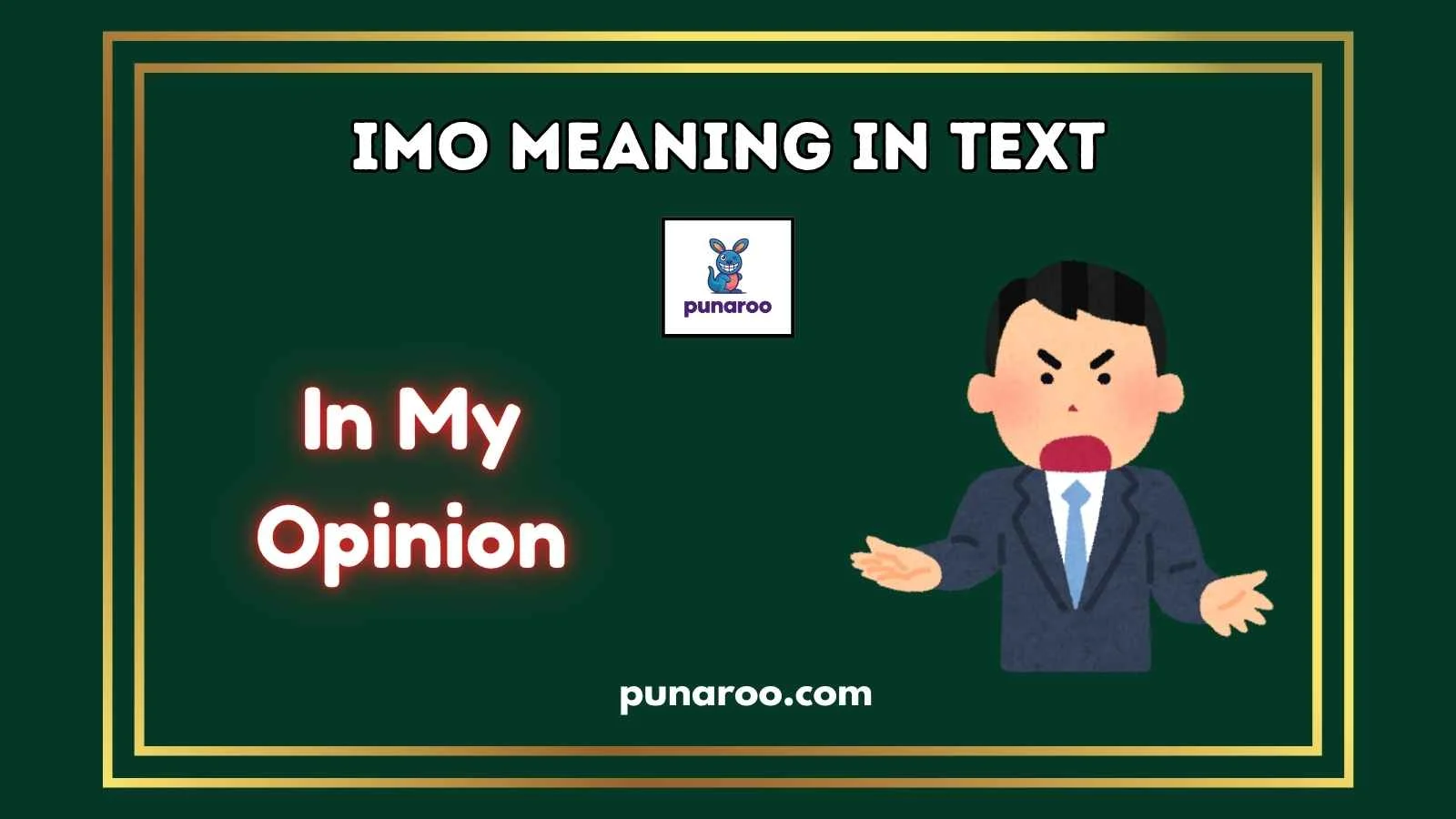
IMO stands for “In My Opinion.” It is used when someone wants to express their personal view about something without sounding too forceful or absolute.
For example:
IMO, this movie was better than the original one.
Here, the speaker is clearly sharing their opinion while making it clear that others may disagree. This makes communication softer and more respectful.
Why People Use IMO in Texting
- ✔ To express personal thoughts politely
- ✔ To avoid sounding too aggressive or arrogant
- ✔ To make opinions feel more casual and friendly
- ✔ To engage in discussions without conflict
Origin of IMO: Where Did It Come From? 📜
The abbreviation IMO comes from early internet forums and chat rooms in the 1990s and early 2000s. During that time, users wanted faster ways to type messages in real-time conversations.
As messaging platforms evolved—like MSN Messenger, IRC chats, and later social media platforms such as Facebook and Twitter—IMO became widely adopted.
Today, IMO is a globally recognized internet slang term used across different platforms and age groups. It has become a permanent part of digital communication culture 🌍
How IMO Is Used in Daily Conversations 💡
Understanding imo meaning in text is not enough—you also need to know how it’s actually used in real conversations.
1. Sharing Opinions
IMO is mainly used to express thoughts or beliefs.
IMO, learning English online is easier than classroom learning.
2. Giving Suggestions
It softens advice so it doesn’t sound demanding.
IMO, you should try restarting your phone first.
3. Debating Online
In arguments or discussions, IMO helps maintain respect.
IMO, that decision wasn’t the best for the team.
IMO vs IMHO: What’s the Difference? ⚖️
Many people confuse IMO with IMHO. While they are similar, there is a subtle difference.
| Abbreviation | Full Form | Meaning | Tone |
|---|---|---|---|
| IMO | In My Opinion | Simple personal opinion | Neutral |
| IMHO | In My Humble Opinion | Opinion with humility | More polite or modest |
👉 Key Insight: IMHO sounds more respectful or humble, while IMO is more straightforward and commonly used in casual chats.
IMO vs Other Popular Internet Slang 🔤
To fully understand imo meaning in text, it helps to compare it with other common abbreviations.
- TBH (To Be Honest): Used when giving honest thoughts
- FYI (For Your Information): Used to share information
- SMH (Shaking My Head): Used to show disappointment
- IDC (I Don’t Care): Expresses indifference
Each of these serves a different purpose, but IMO remains the most commonly used for opinion-sharing.
Real-Life Examples of IMO in Texting 📱
Let’s explore how IMO appears in everyday conversations:
Friend A: Which phone should I buy?
Friend B: IMO, the Samsung one has better battery life.
Group Chat: What should we order for dinner?
Reply: IMO, pizza sounds perfect tonight 🍕
Social Media Comment: That outfit is amazing! IMO, it’s the best look she’s worn.
IMO in Social Media Culture 🌐
Social media platforms like Twitter (X), Instagram, TikTok, and Reddit have made IMO extremely popular.
People use it in comments, captions, and debates to express opinions quickly without sounding too strong or offensive.
For example:
- “IMO, this trend is overrated 😅”
- “IMO, this is the best song of 2026 🎵”
Why IMO Is Important in Digital Communication 🧠
Understanding imo meaning in text is important because it improves how you communicate online. It helps you:
- ✔ Avoid misunderstandings
- ✔ Sound more respectful
- ✔ Engage better in discussions
- ✔ Express yourself clearly
In digital communication, tone is everything—and IMO helps soften that tone effectively.
Common Mistakes People Make with IMO ❌
Even though IMO is simple, many users misuse it.
- ❌ Using it in formal emails (not recommended)
- ❌ Overusing it in every sentence
- ❌ Confusing it with IMHO without understanding context
👉 Tip: Use IMO mainly in casual conversations, not professional documents.
When Should You Avoid Using IMO? ⚠️
Although IMO is widely accepted, there are times when it should be avoided:
- 🚫 Official business emails
- 🚫 Academic essays
- 🚫 Legal or professional documents
In these cases, it’s better to write “In my opinion” fully instead of abbreviating.
How to Respond When Someone Uses IMO 💬
If someone uses IMO in a conversation, here’s how you can respond naturally:
- ✔ “I agree with your opinion”
- ✔ “That’s interesting, I think differently though”
- ✔ “Good point IMO too”
This keeps conversations respectful and engaging.
Quick Summary Table of IMO Usage 📊
| Context | Usage of IMO |
|---|---|
| Chats | Very common |
| Social Media | Extremely popular |
| Emails | Not recommended |
| Debates | Helpful for soft opinions |
FAQs
1. What does IMO stand for in texting?
IMO stands for “In My Opinion,” used to express personal views.
2. Is IMO formal or informal?
IMO is considered informal and is mostly used in casual communication.
3. What is the difference between IMO and IMHO?
IMO is a simple opinion, while IMHO means “In My Humble Opinion” and sounds more polite.
4. Can I use IMO in professional emails?
It is not recommended. Use the full phrase “In my opinion” instead.
5. Why is IMO so popular online?
Because it is short, easy to type, and helps express opinions quickly in digital conversations.
Conclusion:
Understanding imo meaning in text is essential in today’s digital communication world. It is a simple yet powerful abbreviation that helps people express opinions clearly, politely, and efficiently.
From social media posts to casual chats, IMO has become a universal way to share thoughts without sounding too strong or offensive.
Whether you’re debating online or just giving a suggestion, this small abbreviation plays a big role in modern language.

I research and explain the real meanings behind popular slang, text abbreviations, and social media terms. My writing makes online language accessible for everyone.