If you’ve been scrolling through Snapchat, TikTok comments, or casual text conversations and suddenly saw the phrase “ion”, you’re not alone.
Many people search what does ion mean in text because this tiny slang word can be confusing at first glance 😅.
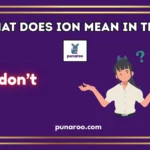
In modern digital communication, “ion” is not related to science or chemistry in most cases. Instead, it is a fast, simplified form of saying “I don’t” in casual speech or texting.
This abbreviation is widely used in informal conversations, especially in social media slang, where people prefer quick, phonetic-style typing.
In this complete guide, we’ll break down what does ion mean in text, where it comes from, how it’s used in real conversations, and how you can use it correctly without sounding confused or outdated. 📱✨.
Quick Answer: What Does Ion Mean in Text?
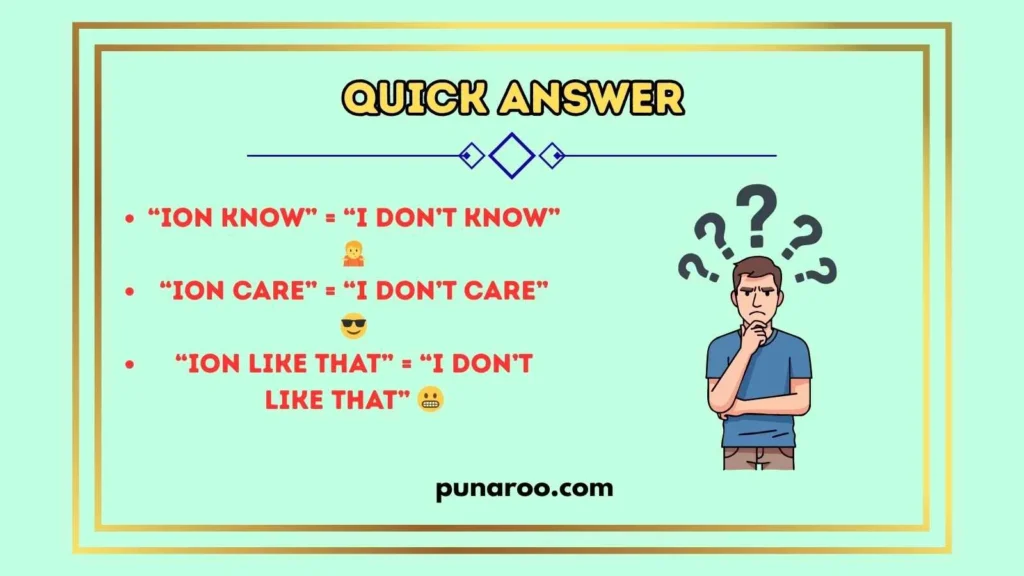
In texting and online slang, “ion” = “I don’t”.
It is a phonetic spelling based on how people naturally speak in casual English. For example:
- “Ion know” = “I don’t know” 🤷
- “Ion care” = “I don’t care” 😎
- “Ion like that” = “I don’t like that” 😬
This shorthand is commonly used in informal speech, especially in African American Vernacular English (AAVE)-influenced slang and social media communication.
💡 Key takeaway: When you see “ion” in text, it almost always means “I don’t” in a relaxed, spoken-style tone.
🧠 The Real Meaning Behind “Ion” in Text
To fully understand what does ion mean in text, you need to think about how people speak rather than how they write formally.
In fast speech, “I don’t” often sounds like “I dun” or “ion” depending on accent and pronunciation. Over time, this spoken shortcut became a written slang term online.
So instead of typing full sentences like:
- “I don’t know what happened.”
People shorten it to:
- “Ion know what happened.” 😭
This reflects the internet’s tendency to simplify language for speed, emotion, and style.
📚 Origin of “Ion” Slang
The origin of “ion” in texting comes from spoken English patterns, especially within informal dialects and urban slang communities.
It gained popularity through:
- 🎵 Rap lyrics and hip-hop culture
- 📱 Early Twitter and Vine posts
- 📸 Snapchat conversations
- 🎥 TikTok captions and comments
As social media grew, so did the spread of shortened slang like “ion,” making it a globally recognized expression in digital communication.
“Language on the internet evolves faster than traditional dictionaries can keep up.” — Digital Linguistics Insight
💬 How “Ion” Is Used in Real Conversations
Understanding what does ion mean in text becomes easier when you see it in action. Here are real-world examples:
1. Expressing disagreement 😤
“Ion think that’s true.”
2. Showing confusion 🤔
“Ion know what you mean.”
3. Casual attitude 😎
“Ion care anymore.”
4. Emotional reaction 😭
“Ion even wanna talk about it.”
These examples show that “ion” adds a relaxed, emotional tone to messages.
📊 Ion vs Other Common Text Slang
To better understand what does ion mean in text, compare it with similar slang terms:
| Slang | Meaning | Example |
|---|---|---|
| Ion | I don’t | Ion know 😅 |
| Idk | I don’t know | Idk what happened 🤷 |
| Imo | In my opinion | Imo, it’s better 👍 |
| Fr | For real | That’s good fr 🔥 |
⚡ Why People Use “Ion” Instead of “I Don’t”
There are several reasons why people prefer using slang like “ion” when texting:
- ⚡ Speed: Faster typing
- 📱 Casual tone: Feels more relaxed
- 🎭 Expression: Adds personality
- 🌐 Social media culture: Fits online style
Instead of sounding formal or robotic, “ion” makes conversations feel more human and expressive.
🧾 Different Contexts of “Ion” in Messaging
Even though what does ion mean in text usually points to “I don’t,” its tone can change depending on context.
😐 Neutral Context
“Ion know.” → simple statement of not knowing.
😤 Frustrated Context
“Ion care anymore.” → emotional detachment.
😂 Humorous Context
“Ion even try anymore lol.” → joking tone.
💔 Emotional Context
“Ion wanna talk.” → sadness or distance.
🌍 Social Media Impact of “Ion”
Social media platforms have played a huge role in making ion popular worldwide.
On platforms like TikTok and Twitter (X), short slang expressions trend quickly because users want fast, catchy communication.
For example:
- “Ion got time for this 💀”
- “Ion even care fr”
- “Ion know why this is funny but it is 😂”
These short phrases often go viral because they are relatable and expressive.
📈 Linguistic Evolution of “Ion”
The internet has transformed language dramatically. Understanding what does ion mean in text is part of understanding this evolution.
Traditional grammar rules are often ignored in online communication. Instead, users prioritize:
- Emotion over structure
- Speed over correctness
- Style over formality
This is how slang like “ion” becomes widely accepted in digital culture.
🚫 When NOT to Use “Ion”
Even though “ion” is popular, it is not suitable for every situation.
Avoid using it in:
- 📧 Professional emails
- 🏫 Academic writing
- 💼 Job applications
- 🧾 Formal documents
In these contexts, always use the full phrase: “I don’t”.
🧩 Common Misunderstandings About “Ion”
Many beginners searching what does ion mean in text assume it relates to science (like ions in chemistry). That’s incorrect in most chat contexts.
Here’s the difference:
- ⚛️ Chemistry: Ion = charged particle
- 💬 Text slang: Ion = I don’t
Context is everything when interpreting slang.
🔍 Featured Snippet Style Summary
Ion in text means “I don’t.” It is informal slang used in social media and texting to quickly express negation in a casual tone.
FAQs:
1. What does ion mean in text messages?
It means “I don’t” and is used in casual conversations.
2. Is ion a real word?
Yes, but in texting it is slang, not formal English.
3. Where did ion slang come from?
It originated from spoken English patterns and became popular through social media.
4. Can I use ion in formal writing?
No, it should only be used in informal chats and social media.
5. Does ion always mean I don’t?
Yes, in texting slang it almost always means “I don’t.”
Conclusion:
Now you fully understand what does ion mean in text and how this small but powerful slang word is used in modern digital communication 📱.
It simply stands for “I don’t”, and it reflects how language evolves in fast-paced online environments. From TikTok comments to casual chats, “ion” helps people express thoughts quickly and naturally.
However, remember to use it wisely—keep it for informal conversations only.

I research and explain the real meanings behind popular slang, text abbreviations, and social media terms. My writing makes online language accessible for everyone.